
Air conditioning systems play a major role in maintaining indoor comfort, especially in regions with extreme summer heat. However, when an old unit becomes inefficient or stops working properly, homeowners start exploring the cost of installing a new AC system. This is the reason many people begin researching how much AC installation will cost in 2026 as soon as they notice rising energy bills, poor cooling performance, or frequent system breakdowns. At Cool Breeze Mechanical Heating and Air LLC, our goal is to help homeowners choose the right air conditioning solution that delivers long-term comfort, energy efficiency, and reliable cooling performance. We provide professional AC installation, system replacement, ductless mini split installation, central air installation, and complete cooling system setup services designed to improve indoor comfort without unnecessary stress or confusion.
In 2026, the cost of AC installation can vary depending on system type, home size, and installation complexity. For most homeowners, a complete air conditioning installation typically ranges from a few thousand dollars for basic systems to higher costs for advanced, high-efficiency setups with full ductwork. In 2026, for a typical single family home, you can expect to invest anywhere from $5,500 to $16,000 for a complete central air conditioning installation, with a national average hovering around $7,500.
Why Is There Such a Wide Price Range?
The final cost of AC installation is not fixed because it depends on many different factors. It is not a simple one-price service, but a combination of several important elements that affect the total price.
These include:
- The type of AC system you choose (central AC, ductless mini-split, or heat pump)
- The size of your home and cooling requirements (measured in tons or BTUs)
- The energy efficiency of the unit (SEER2 rating), which impacts long-term electricity bills
- The condition of your existing ductwork and electrical system
- The complexity of the installation process
Unlike buying a simple product online, AC installation is a major home improvement project. If it is not done correctly, it can lead to poor cooling, higher energy bills, and frequent repairs. That is why understanding the full cost in 2026 is very important before making a decision. This guide helps homeowners understand real pricing, avoid hidden charges, and choose the right system with confidence.
The 7 Key Factors That Decide AC Installation Cost
The average cost of AC installation may look simple, but the actual price depends on many different conditions. Each home is different, so every installation has its own cost structure.
1. Type of Air Conditioning System
The type of system you choose is the biggest cost factor. It decides both equipment price and installation effort.
- Central Air Conditioner (Split System): Best for whole-home cooling with existing ducts. Average cost: $5,500 – $13,000
- Ductless Mini-Split (Single Zone): Good for homes without ducts or single-room cooling. Average cost: $3,000 – $8,000 per zone
- Heat Pump (Air-Source): Works for both heating and cooling. Average cost: $6,000 – $15,000
- Window/Portable Units: Low-cost option for small spaces only. Average cost: $200 – $800
2. Home Size and Cooling Capacity
If an AC system is too small, it won’t cool your home properly during extreme heat. If it’s too large, it will shorten the cycle, causing poor humidity control and inefficiency. Proper sizing using a Manual J calculation is essential for accurate performance. Below is a simple guide showing how home size relates to cooling capacity and typical equipment cost (excluding labor).
| Home Square Footage | Required Cooling Capacity (Tons) | Approximate System Cost (Equipment Only) |
| 600 – 1,000 sq. ft. | 1.5 – 2 tons | $1,800 – $3,500 |
| 1,000 – 1,500 sq. ft. | 2.5 tons | $2,500 – $4,500 |
| 1,500 – 2,000 sq. ft. | 3 tons | $3,000 – $5,500 |
| 2,000 – 2,500 sq. ft. | 3.5 – 4 tons | $3,800 – $7,000 |
| 2,500+ sq. ft. | 5 tons | $4,500 – $9,000+ |
Note: Labor and materials can significantly increase the total installation cost, sometimes doubling or tripling the equipment price
3. Energy Efficiency: SEER2 Rating
SEER2 (Seasonal Energy Efficiency Ratio 2) measures how effectively an air conditioning system converts electricity into cooling output over a full season. In simple terms, the higher the SEER2 rating, the more energy-efficient the system is, which directly reduces long-term electricity costs. Since 2023 standards, the minimum requirement in the southern U.S. is 15.0 SEER2, while northern regions require at least 14.0 SEER2. Modern high-efficiency units (18+ SEER2) can reduce cooling expenses by around 20–40% compared to basic models, although they usually come with higher upfront pricing.
14–15 SEER2 (Basic Efficiency): Lower upfront cost, suitable for budget-focused installations and short-term use.
16–18 SEER2 (Balanced Efficiency): Good mix of affordability and energy savings, often eligible for rebates.
19–26 SEER2 (Premium Efficiency): Advanced inverter technology, quieter operation, and maximum energy savings with potential tax incentives.
Price example: A standard 3-ton 14 SEER2 system may cost around $3,200, while a 20 SEER2 upgraded unit can reach $5,800 or more, not including rebates that may range from $600 to $2,000.
4. Condition and Configuration of Your Ductwork
The performance of a new high-efficiency AC system depends heavily on the condition of your ductwork. If ducts are leaking, improperly sized, or filled with dust and debris, you can lose a significant portion of cooled air, sometimes up to 30% or more. This often requires additional work during installation to ensure proper airflow and system efficiency.
- Duct adjustments or resizing for system compatibility: $500 – $1,500
- Full duct replacement for older homes: $3,000 – $8,000+ depending on layout
- Professional duct sealing (Aeroseal process): $1,500 – $3,000
5. Installation Complexity and Labor
Not all AC installations are simple replacements. The complexity of the job directly affects labor time and overall cost, with labor typically accounting for 40–60% of the total installation price.
Accessibility challenges: Installing outdoor units in tight spaces, rooftops, or uneven terrain increases labor effort and time.
Electrical upgrades: Older homes may require panel upgrades, new circuits, or disconnect installations ($1,500 – $4,000).
Permits and Inspections: Required to meet local building codes and safety standards. The budget typically ranges from $150 – $500.
6. Brand and Equipment Tier
HVAC systems are available in different brand tiers, similar to vehicles, with pricing and features varying based on reliability, performance, and warranty coverage.
Budget-Friendly: Goodman, AirQuest, Ameristar – affordable options with standard performance and basic warranties.
Mid-Range (Value Leaders): Rheem, Ruud, Amana, Heil – balanced systems offering efficiency, durability, and strong warranty support.
Premium: Carrier, Trane, Lennox – high-end systems with advanced features, quiet operation, smart controls, and top-tier performance. These can increase costs by 20–40% compared to standard units.
7. Geographic Location and Seasonal Timing
AC installation costs can vary significantly depending on your location and the time of year the service is scheduled.
Regional Labor Rates: Major cities like New York or San Francisco typically have 20–50% higher labor costs compared to smaller towns or rural areas.
Climate Zone: Hotter regions such as Arizona or Florida often require higher-capacity or more durable systems, increasing overall installation cost.
Time of Year: Peak season (late spring to summer) usually brings higher prices, while scheduling during off-season months like fall or early spring may result in 5–10% savings.
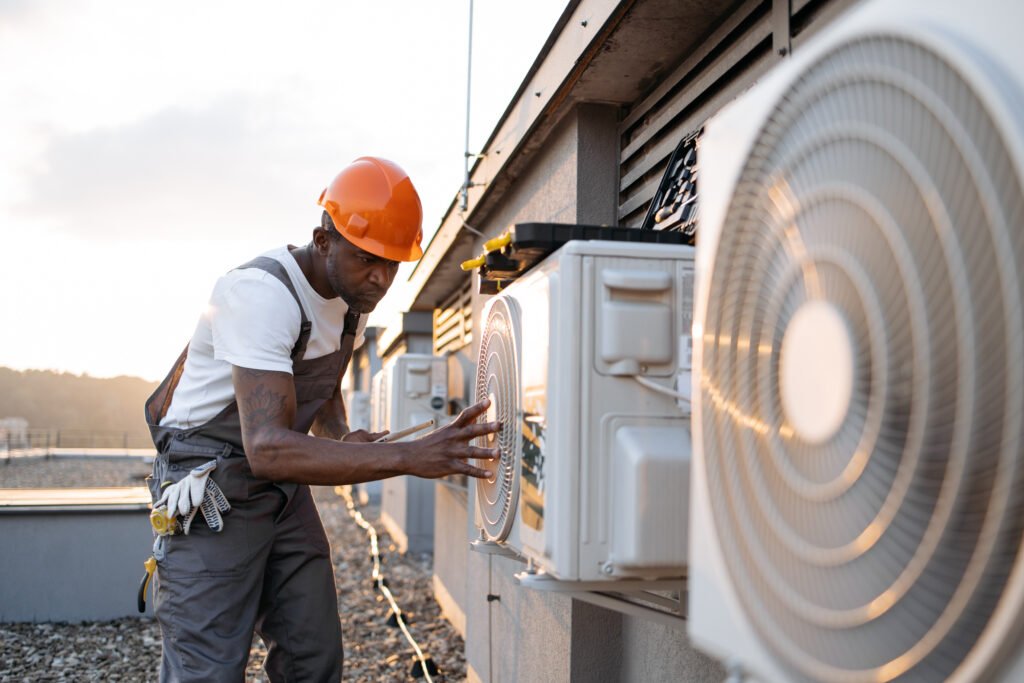
Repair vs. Replacement: Making the Smart Choice
When your air conditioner starts acting up, the real dilemma isn’t just the repair bill—it’s deciding whether another fix is worth it or if it’s time to invest in a new system. Many homeowners struggle with this because continuing to repair an old unit can feel like pouring money into something that keeps breaking, while replacing it too soon may waste remaining system life and unnecessary expense.
To help you make a clear and confident decision, here’s a simple and practical approach that breaks it down step by step.
The “5,000 Rule”: A Simple, Powerful Formula
The industry-standard shortcut for this decision is the “5,000 Rule”. Multiply the age of your unit (in years) by the cost of the repair. If the result is greater than $5,000, replacement is the smarter financial choice.
| Age of AC Unit | Repair Quote | Calculation (Age × Repair Cost) | Verdict |
| 8 years | $400 | 8 × $400 = $3,200 | Repair |
| 12 years | $500 | 12 × $500 = $6,000 | Replace |
| 15 years | $250 | 15 × $250 = $3,750 | Repair |
| 20 years | $200 | 20 × $200 = $4,000 | Replace |
Key Signs Your AC May Need Replacement
The 5,000 Rule helps guide repair vs. replacement decisions, but in some cases replacement becomes the only practical choice regardless of cost calculations.
Your AC uses R-22 (Freon) refrigerant, which has been phased out since 2020. Any leak makes repairs extremely expensive, sometimes costing $150–$300 per pound, making a recharge close to the price of a new system. A failed compressor is another major issue, as replacement can cost $1,800–$3,500 and is often not worth repairing on older units. Rising energy bills are also a strong warning sign older systems use far more electricity compared to modern high-efficiency units, leading to significantly higher monthly costs. Uneven cooling or humidity problems indicate the system is no longer distributing air properly, which cannot be fully fixed with minor repairs. Finally, if you are facing repeated major repairs within a short period, it is usually a sign the system is nearing the end of its lifespan and replacement is the smarter long-term decision.
AC Replacement Decision Checklist
Still unsure whether it’s time to repair or replace your AC? Go through this quick checklist. If you answer “Yes” to three or more points below, it may be time to consider a new AC system.
- Your AC unit is over 12 years old
- Repair costs are higher than $600
- You’ve had another major repair within the last 2 years
- Your system still uses outdated R-22 refrigerant
- Summer electricity bills keep increasing each year
- Certain rooms in your home are not cooling properly or feel uneven in temperature
Why Professional AC Installation Matters
AC installation requires technical expertise, proper tools, and system knowledge. Incorrect installation can lead to airflow problems, reduced efficiency, and higher energy costs. That is why choosing a trusted AC installation company in McDonough, GA is essential for ensuring safe, accurate, and long-lasting system performance. Professional HVAC technicians make sure the system is installed correctly and operates at peak efficiency from the very beginning.
This is especially important because modern systems like ductless mini splits and high-efficiency central air units require precise installation to deliver maximum benefits. Skilled technicians understand proper sizing, refrigerant handling, airflow balancing, and system calibration. The focus is always on delivering reliable AC installation services that improve energy efficiency, enhance indoor comfort, and ensure long-term system durability.
Conclusion
The cost of AC installation in 2026 depends on multiple factors including system type, home size, and installation requirements. While pricing may vary, installing a new air conditioning system is often a more efficient and long-term solution compared to repairing outdated units.
At Cool Breeze Mechanical Heating and Air LLC, we help homeowners choose and install the right AC system for their needs, ensuring comfort, efficiency, and reliable cooling performance for years to come.
FAQs
1. How much does AC installation cost?
AC installation typically costs between $5,500 and $16,000 depending on system type, home size, and installation complexity.
2. What factors affect AC installation cost?
The cost depends on system type, home size, SEER2 rating, ductwork condition, labor, and installation complexity.
3. Is it cheaper to install a ductless mini split or central AC?
Ductless mini splits are usually cheaper for single rooms, while central AC systems cost more due to ductwork and full-home coverage.
4. Why is professional AC installation important?
Professional installation ensures proper cooling performance, energy efficiency, and prevents costly future repairs or system failures.
5. Should I repair or replace my old AC system?
If your AC is over 12 years old, needs frequent repairs, or uses R-22 refrigerant, replacement is often the better long-term option.